For many drivers, the biggest worry after an accident is hearing the word "totaled" from an insurance adjuster. Understanding how a vehicle gets classified as a total loss can help remove the mystery from the insurance process. Ohio insurance companies use specific mathematical rules to decide if a vehicle is worth fixing. Knowing these rules will give you more control over your situation during a difficult time.
What Does It Mean When a Car Is Totaled?
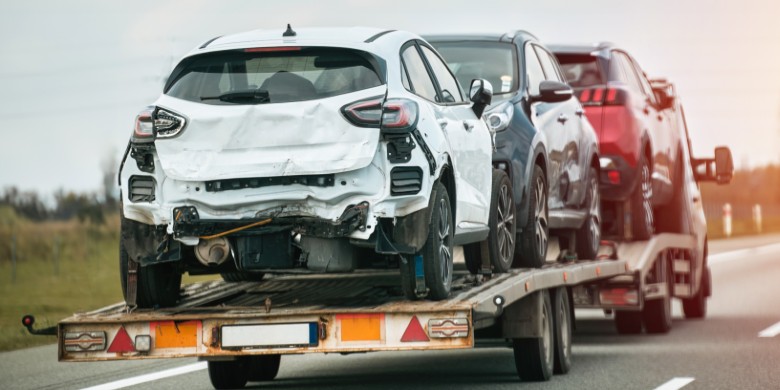
A totaled car Ohio designation doesn't necessarily mean your vehicle is completely crushed or flattened. It simply means that repairing the vehicle doesn't make financial sense for the insurance provider. Many drivers assume a car must be completely destroyed to be considered "totaled". In reality, even minor-looking damage can trigger a total loss if the vehicle is older or has high mileage. The decision comes down to numbers, rather than just visual appearance.
Ohio Total Loss Formula
Every state handles vehicle damage differently for insurance purposes. Some states use a simple percentage rule, where a car is totaled if repairs will cost more than 75 or 80 percent of the vehicle's worth. That's not the case in Ohio. Insurance adjusters here typically use a calculation known as the "Ohio total loss formula."
This formula compares three specific numbers: the estimated cost of repairs, the projected salvage value of the vehicle, and the actual cash value. The math looks like this:
Repair Cost + Salvage Value vs. ACV
To break this down further, the actual cash value (ACV) is what your car was worth the moment before the accident happened. The salvage value is the amount of cash the insurance company can get by selling the damaged vehicle to a scrap yard for parts. If the combined cost of the repair estimate vs. vehicle value, plus the salvage value, is greater than the actual cash value, the insurance company will officially declare the vehicle a total loss.
Role of the Repair Estimate
The entire process starts with an accurate repair estimate. An insurance adjuster will look at the vehicle, but you have the right to choose where your car goes for an official inspection.
When you get a professional estimate, technicians look beneath the surface to find hidden mechanical or structural damage. If the initial estimate is close to the threshold, finding extra hidden damage during disassembly will easily push the vehicle into total loss territory. This is why having a trusted shop evaluate the vehicle is a critical step in the process.
Understanding Your Insurance Payout
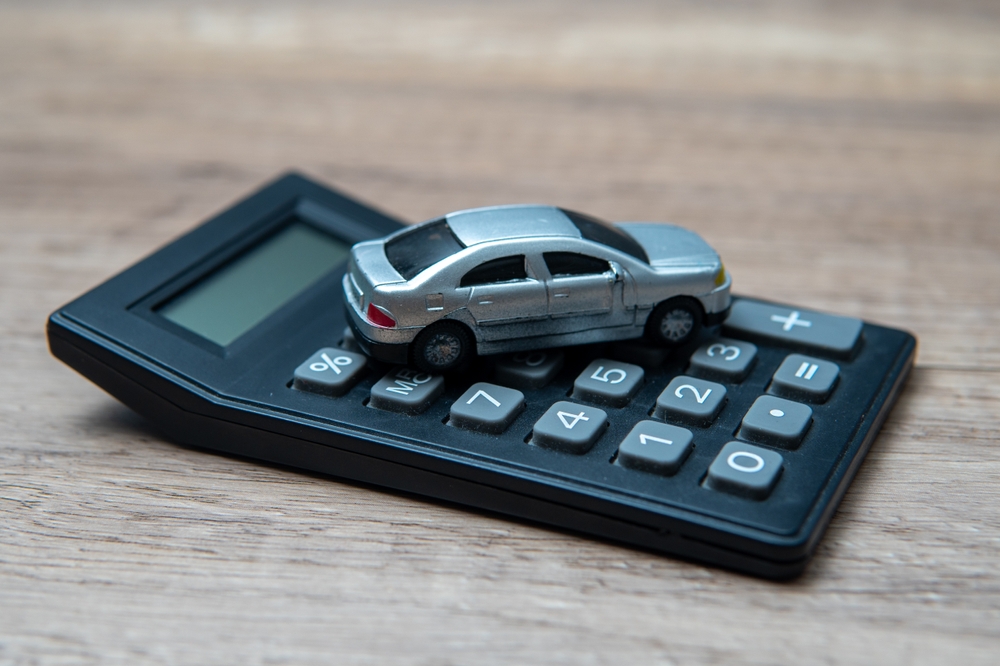
Once a vehicle is declared a total loss, the insurance company will offer you a financial settlement. This payout is based on the actual cash value of the vehicle, minus your comprehensive or collision deductible.
The money is meant to help you buy a replacement vehicle of similar value. However, the payout doesn't always cover what you still owe on your auto loan. If you owe more on the car loan than the vehicle is actually worth, you could face a financial gap.
This is where gap insurance payout options become incredibly important. Gap insurance is a special coverage that pays the difference between the actual cash value of the vehicle and the remaining balance on your car loan. Without this coverage, you'd have to pay the bank out of your own pocket for a car you can no longer drive.
What Happens to a Totaled Vehicle?
If you accept the full settlement from the insurance company, it takes ownership of the vehicle. They'll sign the paperwork and sell the vehicle to a salvage yard.
However, you do have the option to keep the car. This is called owner retention. If you choose this path, the insurance company will deduct the salvage value from your total settlement check. You can then use the remaining money to fix the car yourself.
Keep in mind that if you keep a totaled vehicle, the state requires you to obtain an Ohio salvage title. A vehicle with a salvage title cannot be legally driven on public roads. To drive it again, you must first have the vehicle fully repaired. Then, it has to pass a strict safety inspection by the Ohio State Highway Patrol. After that, you can apply for a rebuilt title to legally drive it.
How Fine Line Auto Body Can Help
As the largest family-owned collision repair center in Central Ohio, we work directly with insurance providers to help you through this process. Our team will provide you with a Fine Line Auto Body estimate, which provides insurance adjusters with the exact figures they need for their calculations. If your vehicle can be saved, our factory-certified technicians will restore it to original safety standards, and we back the work with a lifetime warranty.


 |

 Larry39.928787-82.831698Fine Line Auto Body Alum CreekAddress640 Alum Creek Dr, Columbus, OH 43205, USAManager
 Vick39.954954-82.943272Fine Line Auto Body North HighAddress5022 N High St, Columbus, OH 43214, USAManager
 Bill40.064507-83.018939Fine Line Auto Body South HighAddress3371 S High St #1000, Columbus, OH 43207, USAManager
 zack39.894015-82.996049Fine Line Auto Body Grandview / OSUAddress1515 Olentangy River Rd, Columbus, OH 43212, USAManager
 Tony39.991062-83.026316Fine Line Auto Body at Twins Buick GMCAddress960 Morse Rd, Columbus, OH 43229, USAManager
 Bryan40.062621-82.994239Fine Line Auto Body-Lewis CenterAddress8595 N High St, Columbus, OH 43235, USAManager
 Jorge40.137986-83.017594Fine Line Auto Body - Bethel RoadAddress2829 Bethel Rd, Columbus, OH 43220, USAManager
 Jose40.064534-83.092740Fine Line Auto Body EastonAddress4180 Stelzer Rd, Columbus, OH 43230, USAManager
 Drew40.059478-82.909771Fine Line Auto Body HilliardAddress1451 Hilliard Rome Rd, Columbus, OH 43228, USAManager
 Jordan39.979730-83.151333Fine Line Auto Body BroadAddress4639 W Broad St, Columbus, OH 43228Manager
 Mike0.0000000.000000


